Category: Cool Science

  • 7th Grade Memories

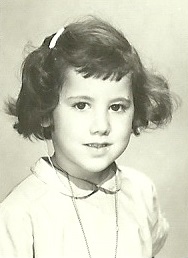
    Back when I first entered kindergarten, my mom did mild bit of forgery on my hospital birth certificate to get me into school a year early. So, I was 4 when I started kindergarten, 5 starting 1st grade, 6 at the beginning of 2nd, etc. I was a smarty-pants, so I did pretty well, spending all 7 years of K-6 in the same school.

    Karen Kindergarten

    If you’ve done the math with me, you’ll know I started 7th grade as an 11-year-old. Which wouldn’t be so bad if I’d gone on to the local junior high with my friends. But the summer between 6th and 7th, we moved from Los Angeles County to the San Bernardino Mountains. I would have to start those most agonizing school years, junior high, in a new school where I knew no one. Even worse, the school I would be attending was a diabolical experiment called a “junior-senior” high school (7th through 12th grade). Okay, it wasn’t diabolical. There weren’t enough students for two schools. But still, that was a lot for a nerdette like me to face.

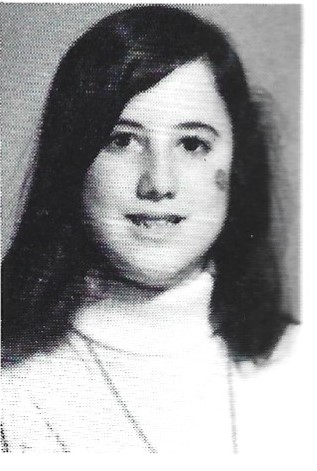
    I was positively geekish as an 11-year-old. I wasn’t too great at personal hygiene, knew zilch about makeup, was awkward and a little pudgy. I remember taking a stab at shaving my legs one morning before school, except I only had time to shave one. So I went to school with one hairy and one not.

    Karen 1966_cr

    So, not any kind of popular. Rubbing elbows with a bunch of cruel, haughty 13- and 14-year-old 8th graders was enough of a challenge, let alone those lofty high schoolers.

    Luckily, the older ones ignored me as being beyond notice. The teachers adored me, since I was a Good Student. And there were a few students in my age group, the ones who walk with the angels, who were kind to me, even if they weren’t actually friends. A couple of the nicest were cheerleaders, so you can dump that stereotype.

    But there were the mean girls, as there always are. They took such delight in embarrassing and belittling me. They were definitely not cheerleaders. There was nothing cheerful about them.

    I sometimes wonder what happened to my tormentors. Maybe they married ugly guys and got fat. Maybe they had an epiphany and realized the error of their ways and were nice forevermore. Ah, I can dream.

    So, worst high school memory–looking forward for weeks to the field trip to Disneyland, then getting hit with a horrible flu the day we were supposed to go. I went anyway and was miserable the whole time.

    Best high school memory–dissecting a mink (long dead and preserved in formaldehyde–and no, today I would never buy/wear an animal fur of any kind). My lab partner and I decided to focus on the skeleton. When it took too long to cut the meat off the bones, I took the leg home to work on it there. Mom got the great idea to boil it on the stove in water. We boiled and boiled without effect until Mom got the idea to add bleach to the water. Extremely dangerous, but boy, did it work. Nothing but bones left after just a minute or so. Don’t try this at home!

    Long story short, I was able to reconstruct a beautiful mink leg skeleton model (okay, there were some teeny tiny bones I threw away cuz I didn’t know where they went). My biology teacher was so enamored with the skeletal leg, he confiscated it. 😠 Sigh, all these years later, I still regret that he never gave it back.

  • Is Recombined Really a Christmas Movie?

    While my largest body of work is in the form of published novels, I have also written a number of screenplays. I have a habit of writing a script, then deciding it would make a better novel or writing a novel that later becomes a script. My Tankborn Trilogy started as a feature screenplay (for a full-length movie). The trilogy then came full circle when I adapted the world of Tankborn into a short film script. Here’s an account of how it all happened.

    Back in September 2016, I attended a pitch session in Los Angeles. It was one of those “speed dating” kinds of things, where we had five or ten minutes to sell our work to a director. After time ran out, the director would move down to the next writer in line and we writers would do our sales pitch all over again.

    The Tankborn Trilogy

    I hadn’t intended to pitch my YA sci-fi trilogy, Tankborn, but I’d brought along a copy of the first book to show I had some cred. Once the five directors I pitched to spotted the hardcover sitting on the table, they didn’t seem to want to talk about anything else. I had screenplays to offer up, but the book was “IP” (Intellectual Property, a term I learned that night). And for many in Hollywood, IP is like catnip to producers and directors.

    I hit it off with one director in particular, Regina Ainsworth, and I sent her my trilogy. Regina loved the books and wanted to talk to me about a possible movie trilogy. But by the time of our chat, I realized what I really wanted to do was to adapt the three books for television. Regina came around to my way of thinking, but then she upped the ante. To give us a “proof-of-concept” to use to pitch the TV series, we would make a short film.

    We brainstormed ideas, and eventually agreed on the concept for Recombined. It took over a year from the concept to the script (rewrites, and rewrites, and rewrites). Plus we were fundraising, and Regina was locking down locations, crew, and cast.

    Recombined Movie Posters

    Meanwhile, we were writing draft after draft of the pilot for our series and working out the series bible. I was working on other projects as well, and helping Regina whenever I could. But as director, the heaviest lift was hers. Finally, in early December 2018, at the former Warner Bros Ranch lot in Burbank, our marathon shoot of Recombined commenced. For that part of the story, check out this post from 2019.

    So, is Recombined a Christmas movie? You decide:

    • It was shot in December, the month we celebrate Christmas
    • The plot of Recombined revolved around a celebration, just like Christmas does
    • It premiered in November, which is pretty close to Christmas
    • There were festive decorations on set
    Festive decorations

    QED

    So, what movies do you think are non-obvious Christmas movies? Share in the comments.

  • Movie to Books to Movie to TV

    What starts as a movie script, morphs into a trilogy of books, segues briefly into a short story, rises again as a movie script, and aspires to be a TV series? The Tankborn Trilogy.

    First came the movie script, Icer. I’ve been a science geek most of my life. I studied math, physics, and computer science in college and grew up reading and watching science fiction. During a UCLA Extension course on screenwriting I started my first feature length script, Icer, an SF story that revolved around genetic engineering.

    After I finished Icer, I wrote other scripts and the occasional novel. But screenwriting is a tough business, so I decided to focus just on novels, and I published my first book in 1998. I wrote mainly romance novels, ten of them for Harlequin. After 16 books, I hit the wall with romance and decided to switch to young adult.

    But what to write? I still loved sci-fi. And I had this great sci-fi story in Icer. What if I adapted it as a book for teens? I jumped into the project feet first, moving the Earth-based story from Icer to the planet Loka and changing my main characters from adults to teens. The result was Tankborn, which became a launch book for Lee and Low’s brand new Tu Books imprint.

    Over the ensuing years, I completed the trilogy: TankbornAwakening, and Rebellion. The three books didn’t follow the original movie script exactly. A feature script is usually only 100-120 pages and the trilogy ended up comprising more than 1100 pages. I had to expand far beyond the story of the script. But each of the books contains bits and pieces of Icer’s story. Step 1 was complete: movie script  book trilogy.

    Then in September 2016, I had an opportunity to attend an event sponsored jointly by the Alliance of Women Directors and the Writers Guild of America. At the time, I had a number of polished feature scripts I wanted to pitch to the women directors I’d be meeting. Of course, one of those scripts was Icer.

    With every intention of pitching Icer, I also brought along a copy of Tankborn. I had no feature film credits to my name, having only had a few short scripts produced. I thought showing the directors a published book might impress them.

    It worked, although not necessarily the way I thought it would. Several of the directors I pitched were more interested in the three books of the Tankborn Trilogy than they were in Icer. They kept referring to the trilogy as “IP” (which I eventually figured out was “intellectual property”) and peppered me with questions about them. Three requested copies of the books.

    One of those three was director Regina Ainsworth. She’d requested autographed physical copies (I’d sent the others ebooks), and a few months later she contacted me to let me know she wanted to chat with me about my work. We spoke in January 2017 by phone. Regina proposed a feature film (maybe a trilogy), but by then I’d had a real vision of the Tankborn Trilogy as a television series. I made my case, and Regina agreed.

    So how was I going to adapt the big, complex plot of Tankborn to the visual medium of television? Especially when I admittedly have a love affair with internal dialogue and tight POV. Being in a character’s head, thinking their thoughts and seeing the world through their eyes, might work in a novel but it’s a non-starter for film or television. An actor has to be able to act out (make visual) everything a character does.

    I could have cut all those internal dialogue/tight POV scenes. But sometimes there’s important information in the character’s head that the audience needs to know.

    Having written both scripts and books, the challenge was an intriguing one. It was reminiscent of when I was a software engineer and had to modify and debug computer code. Maybe more like translating a program from one computer language to another.

    To demonstrate how I translated some of the internal dialogue into a visual scene, I’m including a couple of examples from the novel & pilot below. But first, here’s a thumbnail sketch of Tankborn to give you some story context:

    Genetically Engineered Non-humans (GENs) are created in a gen-tank, programmed with a particular ability or skill called a sket, and enslaved from birth. As part of GENs’ gestation in the tank, gene-splicers install circuitry in their bodies and brains. This includes an interface on their cheek that allows “trueborns” to upload or download new programming, or to erase GEN identities entirely during a reset.

    On to the examples. Here’s some text from Page 1 of the first book, Tankborn.

    An actor could show Kayla hunched on the river bank with a disagreeable look on her face showing that she’s unhappy to be there. I could have written some dialogue between Kayla and her nurture-brother Jal to reveal what Kayla’s plans had been for the day. But there was more subtext that needed to be included besides just Kayla’s grumpiness. I really needed to rethink this scene to make it work for a visual medium.

    So I created a new scene that hadn’t been in the book. I placed Kayla and her nurture-mother, Tala, at a worship service. Kayla’s and Tala’s argument about why Kayla has to go to the river with Jal is woven in with the worship prayers.

    This bit of dialogue serves three purposes. 1) Introduces the GEN faith which is based on servitude. 2) Sets up Kayla having to go to the river with Jal. 3) Teases Kayla’s “sket,” the special ability that the gene-splicers programmed into her while she was in the tank. Her sket will be revealed in the river scene.

    In another new scene that follows the worship service, I include the subtext of Tala’s real reason for sending Kayla to the river to accompany Jal.

    Once I finished the pilot and outlined the entire first season of the Tankborn series, I felt I was close to getting the pieces of a “series bible” together. Then Regina introduced a new wrinkle: we needed a short film, set in Tankborn’s world, to be part of our pitch. We needed a “visual” to sell our concept.

    I proposed we base the short film on an “outtake” scene from Tankborn that didn’t make it into the final version of the book. Regina loved the idea, and I went to work on the script. While the pilot was 50 pages, the short film had to be only 5-7 pages. Writing short is tough, but after some back and forth, we locked down the script. We nailed down a title too: Recombined. Step 2 was complete: book trilogy (a fragment of it anyway)  movie script.

    We’re now on to the next phase of our short film, crowdfunding. That’s where we’ve asked our friends, and friends of friends, and people who don’t even know us if they can pitch in a little bit to help us make Recombined. Click the picture below to check out our campaign.Regina and I are very passionate about this project (as is Neobe Velis, our producer). We’re especially excited that Recombined will be a inclusive production, with a diverse cast and crew. With a particular commitment to gender parity in front of and behind the camera.

    But we can’t get it done without help from others. And by “help,” I mean donations. If that’s something that inspires you, check out our campaign page. Any amount from $1 on up will be greatly appreciated. Even better, donations are tax deductible. And every one will help us complete Step 3: Movie script  TV series.

    Want to share about the campaign on Facebook or Twitter? Also very much appreciated. Here’s a sample post:

    I found this fantastic campaign to support – written, directed & produced by women. Join me in amplifying an awesome story! Donate here:  https://www.hatchfund.org/project/recombined_a_sci_fi_short_film #diversity  #inclusion #femalepower #scifimovie

    And going back to the beginning of this blog post, you might remember I mentioned that Tankborn segued briefly into a short story. That story is “Sacrifice,” set in Tankborn’s world and featuring new characters. “Sacrifice” is for sale on Amazon, but if you donate any amount to the Recombined campaign from $1 on up, forward me the receipt at karen at karensandler dot net and I will send you a free copy of “Sacrifice” as a thank you.

    This post originally appeared on Fantasy Cafe.
  • Exciting News About Tankborn

    In previous posts, I’ve talked about how I’ve lived a double life as a writer. At the same time that I’ve written my 22 novels, I’ve been writing screenplays. Screenplays for full-length movies, for TV shows, and short scripts. I’ve had a few of my short scripts produced, including my horror comedy, SWEET TOOTH.

    In late 2016, I met a director and pitched my Tankborn Trilogy to her, thinking it would make a pretty good TV show. She read the books and loved them, and since then we’ve been working together on a series bible and a pitch for studios.

    A key part of that pitch will be a short film called Recombined which is based on a scene from Tankborn that was edited out of the final book. Once it’s completed, we can show Recombined to studios to help them imagine Tankborn’s world. We can also use the short film to create “buzz” for a Tankborn TV show. Wouldn’t that be awesome?

    I wrote the script, Regina Ainsworth will direct it, and Neobi Velis will produce. We’ll have more crew coming on when the film is funded.

    That’s where you come in. We want to produce a high quality film that we can take to film festivals and eventually release online. That takes a good-sized budget, even for a short film. So Regina, Neobe, and I are running a crowdfunding campaign for Recombined using a site called Hatchfund.

    There are donation levels for everyone who wants to contribute to seeing Tankborn become a television series. You can give $1, $10, $25, $50 or more, and every level has a great perk. Just check out the campaign page.

    I am very passionate about Recombined, and so anxious to see it get made. The film will touch on the same social justice issues as the Tankborn Trilogy did, and the cast and crew will be diverse and inclusive. It’s everything I would want in a project that I’m involved in.

    Can you help? Chip in $1 or $10 or more? Or if you’d like to help in another way, please share the link to the Recombined campaign page on social media. The more word gets out, the greater the chance that Recombined will become a reality.

    Thank you,

    Karen Sandler


  • When Fiction Becomes Future…or Present

    KarenSandler_TillTheStarsFade_200pxScience fiction is a funny genre. There are those (like me) who devour it, who sometimes feel there’s something missing in a book that doesn’t include at least a little imagined science. Then there are those who just don’t get the genre, are completely alienated by it. To them, it’s weird and unreal.

    Yet in the best science fiction, there’s nothing more real. It looks ahead to what might be and extrapolates not just the science, but how people adapt to the science. It can show how one change, small or large, completely transforms a people, a society.

    The Green Movement in Iran and the more recent Arab Spring got me thinking about a Larry Niven story I read thirty or so years ago. “Flash Crowd” showed the impact of the transfer booth, an instantaneous, essentially free form of travel. You step into a transfer booth down on the corner near your house (like a way cooler bus stop) and in the next moment you’re downtown, or at the university or at the local mall.

    What happens in the story is that folks start hearing about something interesting going on at Santa Monica mall (a stretch of several pedestrian-only open air blocks in Santa Monica, CA) and all those people jump into transfer booths. This near immediate influx of people on the mall leads to a riot, something that never could have happened if folks had to climb into their cars, negotiate Los Angeles freeway traffic, find a place to park, etc. Easy availability of transfer booths = riot.

    Transfer booths haven’t been invented yet, but think about their virtual equivalent. The Internet. Facebook. Twitter. Texting. The demonstrators during the Arab Spring used those near instantaneous forms of communication to organize, to plan, to keep their compatriots and sympathizers and the outside world updated as to conditions on the ground. The protesters couldn’t instantaneously appear in the streets of Cairo or Damascus, but the Internet and cell phones have facilitated their movements.

    What Larry Niven predicted when he published “Flash Crowd” in 1973 didn’t come literally true. We still haven’t figured out how to instantaneously transport matter from point A to point B. But that phenomenon of informing the world in an instant has come to pass and in the case of the Arab Spring (despite the current state of affairs in Syria), I think that can be a good thing.

    Have you read a book or a short story that has projected a possible future? Have you seen that projected future become now? Leave a comment. Include the title and author if you have it.