Category: The Writing Life

  • What Should a Writer’s Conference Be?

    NY Street2sHaving just returned from the SCBWI winter conference in NY, I started pondering what the best format for an annual writer’s conference should be. Then it occurred to me that there may not be a “best.” Partly because the attendees are always at different stages in their careers:

    • thinking about becoming an author
    • starting a first book
    • crying out to the gods as they battle with a saggy middle
    • in the middle of revisions with a finished book
    • querying agents/editors with a polished book
    • agents/editors are requesting (yay!)
    • first sale!
    • multi-sales
    • a legend in the business

    There might be some other stages, but this covers a goodly portion. The thing is, each of these authors/writers require something different from a conference. For the first several stages, workshops on craft (plotting, characterization, beginnings, middles, and ends, turning points, dark moments, using compelling language, cutting out the fat, etc) are ideal. The hands-on type are especially useful, where the writers can walk out with something they created during a workshop. They also need inspiration from published authors, whether the old hands or the ones celebrating their first sale.

    As we get into the group with a truly polished manuscript, workshops on query letters would be great, as well as that all important opportunity to meet agents/editors and get an invitation to submit. The chance to find out what editor is looking for what is invaluable for someone with a manuscript ready to go. The craft workshops are probably still valuable for those in this category.

    Those craft workshops might also be useful for those who have made a first sale. From experience, writing one salable book and getting a contract for it does not mean the writer knows everything there is to know about writing. Some tips on how to continually improve are welcome. After all, you have to sell that second and subsequent books.

    For multi-published authors, a view into trends is somewhat useful, although we all know we shouldn’t write to trends. Workshops on the business side of things–contracts, tax issues, avoiding burnout, etc.–are more welcome than how to write a compelling character. It’s not so much that a multi-published author knows everything, but that the most commonly presented material in craft workshops these folks have already heard again and again. In fact, they could present those workshops.

    As to the legends, they would be giving those inspiring keynotes. They might not want to wade into the masses every day of the conference (too exhausting), but sometimes it’s really nice to just be with people who understand you, so I would think that would be a draw for the legendary authors amongst us.

    The organization that I think does the best job of presenting a well-rounded conference, one that covers the most stages of a writer’s career, is Romance Writers of America. They do a real whizbang job of it. It’s fairly expensive, especially if you’re not a member, and some of the workshops will be romance-specific. But there are plenty that are generic enough any genre could get value from them.

    So, what do you think? What would your ideal conference be like?

  • Funny Stuff

    This week’s Road Trip Wednesday at YA Highway asks, Who is your favorite comedian or funny book and/or movie? I don’t follow comedy much, so I’m not sure I have a fave comedian. If I had to name one, it would be Jon Stewart. Funny movies–I don’t see a lot of them, period, and the ones I see tend not to be comedies. I liked Bridesmaids (which I saw on a flight back from The Netherlands), but I don’t usually like that kind of gross-out humor.

    Books, though, I can come up with three right off the top of my head. Two more recent offerings in YA, one from the ’60s that I originally read in high school.

    Newest first. Fellow Tu Books author Kimberly Pauley’s Cat Girl’s Day Off was a silly, goofy, fun, funny laugh-out-loud treat. I liked it so much, it was my RTW Best Book in April 2012.
    Second, John Green & David Levithan’s Will Grayson, Will Grayson was a gem. Back in the day (when I was an actual teen reading books about teens), a book like Will Grayson, Will Grayson would have been called a “coming of age” book. I love how the two main characters and excellent secondary characters (the two Wills and Tiny) are all so beautifully drawn. I disliked the second Will Grayson character almost immediately, but he had such a fantastic character arc, I loved him at the end.

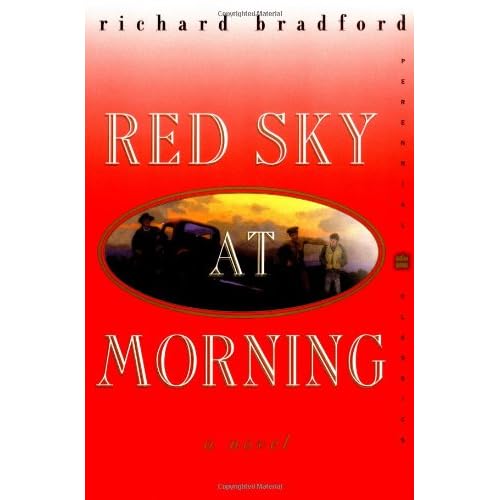
    Third, Richard Bradford’s Red Sky at Morning is an actual “coming of age” story that very much deserves to be read by today’s audience. Published in the mid-sixties, the story takes place during WWII. The main character is Josh Arnold, and his father is going away to war. Josh and his mother have to move from Mobile, Alabama to Corazon Sagrado, New Mexico. Red Sky at Morning is also a “fish out of water” story as Josh, used to city life in the South, has to adjust to a small town in the mountains of New Mexico where he’s in the minority (most of the town is Hispanic). This is one of those books that will have you roaring with laughter, then sobbing within a few pages. A wonderful book.

    How about you? Read any good, funny books?

  • Goals–Fear & Loathing

    Goal KittenThis week for Road Trip Wednesday, YA Highway asks, What are your goals for the new year–for reading, writing, or other? I gotta tell ya, this kind of question always terrifies me.

    It goes along with that equally frightening question, Where do you see yourself in five years? Luckily I’m not out there pounding the pavement looking for a job and so I don’t have to answer that one.

    The thing that’s so scary about goals is that I immediately fear I won’t be able to reach them. I’ll promise myself I’ll lose five pounds, and that bowl of ice cream will tempt me. I’ll declare I’ll read four books a month, and I’ll come up one short. It’s much easier to do things “unofficially,” that is, having the idea or notion or half-baked whatever that I might want to eat half as much ice cream next time I scoop up a bowl. And maybe I’ll count the number of books read without stating that this many reaches a goal.

    That’s not to say I can’t meet deadlines or finish tasks. I do that all the time. I have a few book deadlines in the upcoming year that I have to meet. But those aren’t really goals. To me, a goal might or might not happen, and let me tell you, these books have gotta happen. No choice there.

    So what is it about the word goal that makes me cringe, that makes me worry? What’s up with that, do you think?

    Well, whatever it is, let me put on my big girl panties and fess up to one goal I’d like to achieve. Here it is: I want to become more disciplined in my writing life. I’d like to accomplish that by resisting the allures and attractions of the Web and Internet when I should be writing. It is ever so much more entertaining to read blogs and tweets all day than it is to put words on a page.

    big-foot-wavingGulp. There, I said it. And I will work toward it, I promise. I will do my best to achieve that big, scary goal.

    How about you? What are your hopes for the new year?

  • Who Are You (woot-woot)?

    Tankborn smlThis week, YA Highway asks the questions How do you decide on names? Would you ever name a character after a friend/family member/ex?

    Back when I was writing romances, I wanted everyday names for my characters. So I kept a baby names book near my computer. I’d flip through it for my hero’s or heroine’s name, looking for one that seemed to match the character’s personality. When I found the right name, a little bell would go off inside me. I could see the character that much more clearly.

    When I started writing the Tankborn series, I couldn’t use a baby name book anymore. The Tankborn trilogy is set hundreds of years in the future. To set the tone for the world, the names needed to be a little more exotic than what’s on offer in the naming books. Also, I had a multi-ethnic cast and I needed names that would suit them. So I had to rely on the Web, and sites that listed, for instance, Brahmin or Chinese or Zimbabwe given names and their meanings. Here’s one of my fave sites for finding international names.

    Kayla, the name of my main character in Tankborn, isn’t super unusual. At least it isn’t now. When I first came up with it, back when I was writing the movie script that later became Tankborn, I thought I’d made up the name Kayla. Not so much.

    When I wrote the first book, I did make up some of the names of other characters: Tala, Jal, Tanti, Quila. In real life, people make up names all the time for their children, why wouldn’t they in my future world? I used made up names mostly for GENs, sometimes for lowborns. And just as with Kayla, sometimes the names I thought were made up, that originated with me, were actually “real” names (Pia and Risa come to mind).

    For my trueborns, I used real names of various ethnicities. There’s Devak (Indian), my main male character, Devak’s friend, Junjie (Chinese), Devak’s father and mother, Ved (Indian) and Rasia, (Indian). Raashida (African), is an important character in Awakening, the upcoming follow-on to Tankborn.

    Do I ever use the names of real people in my books? Yes, although I don’t match the character to the real person. I just “borrow” the real name because I like it and it works for my book. I borrowed Zul (Devak’s great-grandfather) and Azad (Devak’s dead half-brother) from people I actually know.

    How about you? If you write, how do you come up with those character names? If you’re a reader, have you ever stumbled across a name that didn’t seem to fit the character, or a name that was absolutely perfect?

  • I Love You, You’re Perfect…Now I’m Gonna Revise You

    rewriting_265x265This week, with November and NaNoWriMo in the rear view mirror, YA Highway’s Road Trip Wednesday asks, How do you approach editing/revising?

    So, here’s the first most important thing about revising. You should write your draft knowing that you not only don’t have to get it perfect the first time through, you’re not expected to get it perfect. That’s one thing about NaNoWriMo that’s pretty great. The demand is so enormous (having to average close to 1700 words a day, every single day of November), you can’t possibly revise as you go. You just have to barrel ahead, getting the words down. But you have that freedom every time you write. You can always fix it later.

    Here’s the second most important thing–nothing that you’ve written is sacred. Nothing. Nothing. Every chapter, scene, paragraph, word, even character must be subservient to the story. If something doesn’t work, even if it worked at first, but in the course of revising is no longer relevant, that beautiful chapter, scene, paragraph, word, or character must go. And you must be ruthless in cutting out that dead weight.

    Here’s the third most important thing about revising. You must approach your revisions as if you were the editor rather than the writer of the book. You must go in there looking for trouble, not expecting a masterpiece. And you should never take it personally. Even the best manuscripts go wrong sometimes.

    Now that we’ve got those three basic musts down, here are a few other things I’ve learned over the course of writing and revising 20+ books.

    1. Give it a rest. After you’ve finished your manuscript, give yourself some time so you can return to it with a fresher eye. How much time? I personally don’t like to go longer than a week, and it’s usually just a few days. But you might need a couple weeks or even a month.
    2. Give it a read and think story as you go. Are the story questions answered? Are all the setups paid off? Is there extraneous material that doesn’t move the story forward? Are there characters who don’t pull their weight? This is where your major revising will be happening, where your bigger problems are solved.
    3. Give it another read and look at characters and details. Are your characters’ actions & dialogue consistent for them? Have you introduced word or phrasing repetitions in the course of your first big revision? Ditto for typos?
    4. Give it a final read. Are there any parts that just don’t flow? Awkward phrasing, expository dialogue, settings that are either overly detailed or not detailed enough? Anything confusing that you think a reader might stumble over or have a problem following?
    5. Let someone else give it a read. If you have a critique group or a beta reader, preferably someone who has never heard about the story, ask them to read it. It has to be someone whose opinion you completely respect and trust. And you have to be open-minded about their feedback.
    6. As needed, give the manuscript one last revision based on reader feedback.

    So is it a hard and fast rule that you must give your book three (and only three, no more, no less) readthroughs? No. But is it necessary to pay attention to all of the above elements while revising? I’d say yeah. If you can do that with one pass through the book, that’s great. As long as you’re reading with an editors eye, and are brutally honest with yourself about what’s working and what’s not.

    Happy revising!