Tag: karen sandler

  • Horse of a Different Color and How Writing Matures

    I’m lucky enough to own a beautiful mare named Belle. She’s half-Andalusian and half-Morgan, and a gorgeous gray. She just turned 16 a couple weeks ago.

    If you don’t know horses, you might not realize that 1) most of the “white” horses you see are actually grays, and 2) gray horses always start out as a different “normal” horse color. They might be black, or bay (brown with black mane, tail, and lower legs), chestnut/sorrel (a coppery color all over), even paint (spotted). Eventually though, they all end up like my mare Belle is now.

    Check out the “before” (when she was about 4 years old) and “after” (taken yesterday at age 16). Yes, same horse.

    Young Belle1Belle Eating2s

    Another interesting fact about gray horses is that in some breeds (Andalusian & Lipizzaner, for instance), nearly all the horses in that breed are gray. In others (Morgans, for instance) few are gray. So a non-gray Andalusian is very desireable, and a gray Morgan would be quite unique. Another fun fact: since a gray horse starts out looking non-gray, breeders will send DNA (hair) to testing labs such as at UC Davis to test for color. If they have a black Andalusian, they want to know for certain it’s going to stay black, especially if they’ll be breeding the stallion or mare.

    Gal canterI didn’t bother testing Belle’s DNA since she was already a dark dapple gray when I bought her. She’s half-Morgan (her dam was chestnut) and half-Andalusian (her sire was gray), and I guess the gray won.

    That’s her at age 8 to the left. You’ll notice that although her body is quite dark, her face is nearly white. Horses tend to start graying on their face. That white star on her forehead you can see it in the first picture above has blended in with her white face.

    So what does this have to do with writing? Well, on the surface, nothing. But it got me thinking about two ways writing and a writer changes and matures just like a gray horse does. First, writing matures through revision, which I talked about in my last blog post. You could say a book matures from its infant self (the rough draft), to its grade-school self (first read-through), to its teen self (post-developmental edit re-write, to its adult self (polished final draft) throughout the stages of revision.

    The second way a writer and her writing matures is through time and experience. That’s mainly experience as a writer, but also experience with the outside world. Years and the kind of life led (different for everyone) change perspective. The things you see happening to others, or participate in yourself, can all become fodder for your writing. What happens in your particular life will change your writing and improve your ability to write your characters and describe their experiences.

    That’s not to say that someone in their teens couldn’t write an elderly character, for instance. I don’t have to be a man to write a male character. I don’t have to be an evil villain to write one. I just have to observe, ask questions, and use my imagination.

    But my years (do I have to mention how many?), maturity, and the experience that comes from writing 20+ books have led me to write that male character or that evil villain much differently than how I would have written him a couple decades ago. In fact, I am right now revising a 20-year-old book from my backlist so I can indie-publish it. While I’m pleasantly surprised that most of the writing holds up, some of the characterization doesn’t. I’ve learned tons more about character since I wrote this book. I also noticed signs of “first time author syndrome” throughout that early book. Overuse of adverbs, trying too hard with descriptive passages, clunky dialogue. What seemed to work twenty years ago I realize has to be revised. Seeing it through the lens of a couple decades of intense experience writing novels makes all the difference.

    So, two lessons to be learned from this. 1) you’re going to write some great stuff early in your writing career. Some of it will be beautiful, just like Belle was a real looker as a 4-year-old (yes, I found a way to turn this back around to horses). 2) You’re going to continually learn and grow and improve. When you look back at your earlier prose, you might cringe. But you’ll also have the satisfaction of knowing you got better as you matured as a writer. Your writing developed and became even more gorgeous (just like Belle :-)).

    photo2Have you seen that progression already? If so, what’s one thing about writing you’ve learned with experience? Or if you’re not a writer, is there another area of expertise in which you’ve learned and grown? I’d love to have you share in the comments. Tell it to the hoof!

  • 10 Must-Do’s for Manuscript Revision

    Awakening Final cover-sA little over a week ago, I turned in Book 3 of the Tankborn trilogy. A few weeks ago in this blog post, I gave tips on how to finish your novel, suggesting among other things to turn off your internal editor and just soldier through to the end. That there’s plenty of time for revision later.

    Well, once I’d finished Book 3, later became now. I had to switch gears from finish the darn thing to polish the darn thing. I finally had to open the door to that infernal, internal editor who’d been cooling her heels in my mental waiting room. It was time to let her inside to start picking things apart.

    In fact, revision is a good time to stuff your ego into that waiting room and let the Evil Blue Pencil Lady rip. Even the most beautiful prose may have to fall to her figurative ax if it has no place in the story.

    So what should your inner editor be looking for? Here are ten areas of focus, from simple and mechanical, to more complex developmental issues.

    1. Fix the typos. That may seem like the most obvious advice ever, but whether you’re planning to indie publish or submit to an editor for traditional publishing, nothing says Amateur more loudly than a typo-riddled manuscript. A reader of indie books might forgive one or two typos (as will an editor at a traditional house), they may never get past the Amazon sample if every other paragraph has a misspelled word or commas where they don’t belong. And if you’re thinking, My word processor will catch my misspellings, Word won’t flag everything, such as an improper use of there, their, or they’re. It takes your own eyeballs to catch that kind of problem.
    2. Watch for repeated words. Sometimes in the rush of writing your book, you don’t realize you’ve used the word shimmer three times in four paragraphs. Or monstrous. Or fantasy. These are just examples of very distinctive words that need to be used sparingly in a manuscript. You won’t always realize that you’ve overused words like this until you’re doing your revision read-through. You might not even spot them yourself, but your beta reader will. If you find you’ve used monstrous three times in one page (because there’s an enormous beast that must be described), it’s time to pull out the thesaurus. Or go to Reverse Dictionary to find alternate words (such as grotesque, unnatural, and colossal).
    3. Double check word choice. Are you using effect when you meant to use affect? Tankborn smlRavenous when you meant to use rapacious? Sometimes our brains play tricks on us in the heat of writing that first draft and we type a word that’s somewhat similar to another that we meant to type. Or there might be a word you thought meant one thing that actually means another. So make sure you’ve chosen the right word for the right situation.
    4. Clear out the redundancies. Since Book 3 is part of a trilogy, I felt the need to occasionally catch up the reader on what happened before. As I read through the book I realized I was overdoing it on the catch-up. I didn’t need to mention four times that GENs could be reset and have their personalities wiped away. Once, maybe twice, was enough. Even if your book isn’t part of a trilogy, you might need to remind a reader of a plot point, but be cautious of being repetitious. Delete those redundancies.
    5. Chuck out your pet weaknesses. What do I mean by pet weaknesses? Just about every writer has a favorite word, type of punctuation, idiomatic expression, or writing device. Sometimes it’s part of their voice, but sometimes it’s just plain habit. For me, it’s the em dash (those long dashes that can break a sentence to insert a separate thought) and its kissing cousin, the ellipse. (…) I allow myself to em dash and ellipse with abandon as I write the draft, then I go back and ruthlessly cut them back. You’ll find a few in the final book, but far fewer than I’d written originally. Make sure you’re not overdoing those pet weaknesses.
    6. Eliminate the ambiguities. If you get confused at your own prose as you’re reading through (What the heck did I mean by that?), obviously you need to fix and clarify. But sometimes you won’t realize that something in a scene is ambiguous because of all that background you’ve got tucked away in your brain. This is where a beta reader is invaluable, because they won’t have the answers in their head the way you do. They will find the ambiguities. For example, if you wrote, Jenna and LaShonda walked into the room, and she picked up her sword, you’ll know it was LaShonda wielding the sword. But the sentence is ambiguous enough that your beta reader might not figure that out with the sentence written that way. Make sure you’re crystal clear.
    7. Delete the extraneous. Sometimes when you’re going with the flow writing that first draft, you’ll write a scene that just seems right. Once you’ve finished the book and you’re reading through, you’ll realize that scene never goes anywhere. It doesn’t move the story forward, doesn’t reveal any new important information to the reader, doesn’t add context to the characters or setting. That scene has to go. If there happens to be one little bit of information in it that is useful, you can place that elsewhere. You’re not allowed to leave it in the book just because you like it.
    8. Pay attention to continuity. Have you ever watched a TV show and in one shot the character’s wine glass is full, then in the next it’s half-full, then it’s full again in the next shot? Someone didn’t pay attention to continuity in that scene. In the case of Book 3 of the Tankborn trilogy, I have a scene early on where the characters have to show their ID to the authorities. Later when my characters encounter the authorities again, I’d forgotten about that entirely. During the revision, I had to put that ID-check into the later scene for continuity’s sake. If you set something up early on in your book, you have to be consistent later.
    9. Make sure your scenes are in the right order. In general, a book should get more and more exciting from beginning to end. The perils should increase, the revelations should be more and more monumental. You should make sure you have “rising action” from start to finish. If you find that a scene that should be closer to your climax appears too early, switch your scenes around. Don’t be afraid to juggle as needed.
    10. Answer all story questions. The worst thing you can do is have a reader finish your book and say, “But, but, but…what about that blue horse?” If you had a blue horse on page 134, you’d better “pay off,” i.e., make clear why that blue horse was there, by the end of the book. Never leave the reader hanging, wondering what the heck a particular scene had to do with the story. In fact if there doesn’t seem to be a way to pay a scene off, see number 7 above.

    There you go, 10 guidelines for revision. Are there any you think I missed? What do you watch out for during your revision process?

  • Happy Book Birthday!

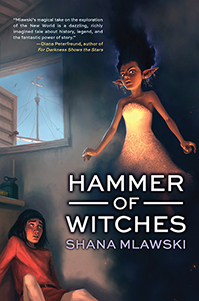
    Sometimes the passage of time between when a book is contracted and when it’s finally launched into the brave new world seems like forever. But finally it’s the official release day for Tu Books’ spring 2013 releases. The first one is mine, the second by fellow Tu Books author Shana Mlawski.

    Awakening Final cover-s

    Awakening by Karen Sandler, Book 2 of the Tankborn trilogy

    Once a Chadi sector GEN girl terrified of her first Assignment, Kayla is now a member of the Kinship, a secret organization of GENs, lowborns, and trueborns. Kayla travels on Kinship business, collecting information to further the cause of GEN freedom.

    Despite Kayla’s relative freedom, she is still a slave to the trueborn ruling class. She rarely sees trueborn Devak, and any relationship between them is still strictly forbidden.

    Kayla longs to be truly free, but other priorities have gotten in the way. A paradoxically deadly new virus has swept through GEN sectors—a disease only GENs catch. And GEN warrens and warehouses are being bombed, with only a scrawled clue: F.H.E. Freedom, Humanity, Equality.

    With the virus and the bombings decimating the GEN community, freedom and love are put on the back burner as Kayla and her friends find a way to stop the killing . . . before it’s too late.

    Hammer of Witches by Shana Mlawski

    Baltasar Infante, a bookmaker’s apprentice living in 1492 Spain, can weasel out of any problem with a good story. But when he awakes one night to find a monster straight out of the stories peering at him through his window, he’s in trouble that even he can’t talk his way out of.

    Soon Baltasar is captured by a mysterious arm of the Spanish Inquisition, the Malleus Maleficarum, that demands he reveal the whereabouts of Amir al-Katib, a legendary Moorish sorcerer who can bring myths and the creatures within them to life. Baltasar doesn’t know where the man is—or that he himself has the power to summon genies and golems.

    Baltasar must escape, find al-Katib, and defeat a dreadful power that may destroy the world. As Baltasar’s journey takes him into uncharted lands on Columbus’s voyage westward, he learns that stories are more powerful than he once believed them to be—and much more dangerous.

    I hope you’ll check them both out!

  • OnFireFiction, or Creating a Creative Cooperative

    In October 2012, I attended the annual conference of Novelists, Inc, one of the alphabet soup of writer’s groups (SCBWI, SFWA, MWA, and SinC) to which I belong. As I mentioned in this blog post, one of the hottest topics of discussion (and there were plenty of hot topics at that conference) was the concept of what came to be called an author “lifeboat.” The idea was for several authors with similar goals to join together in a mutual aid society of sorts in order to help one another promote. And although there were some fits and starts with the group I joined (because of shifting membership), we now have a vigorous  “lifeboat” of eleven authors:

    Awakening Final cover-sSo who are we? We’re all authors who started out publishing “traditionally” (i.e., in paper by NY publishers). We’re bestselling authors–NYT, USA Today, Waldenbooks. We pretty much know the publishing industry inside and out. And we’ve all branched out into independent publishing.

    Some of us still sell and publish traditionally (including me with my Tankborn trilogy and Janelle Watkins mysteries) as well as publish independently (in my case, I’ve got six indie romances up for sale at Amazon, Barnes & Noble, etc). Some have made the switch to indie-only and don’t intend to sign another traditional contract. But we all want to increase our success as authors.

    UnsuitablyPerfect_Bundle200As part of our process, we’ve branded our group OnFireFiction, and already have a Twitter and Facebook presence set up, with a website to come. We’ve got a cool tagline (From smoldering to blazing–OnFireFiction) and are developing a logo. We’ve already produced our first joint project: Unsuitably Perfect, a compilation of three full-length romance novels by me, Lisa, and Barbara. We have other compilations planned with other combinations of our member authors, as well as a couple of themed anthologies that will contain new content by all of us.

    How have we coordinated all of this, when only four of us live in the same state, and even those four are at least a couple hours drive from one another? We started with e-mail, then as mentioned in the previous blog post, we used a combination of a face-to-face meeting and Skype to help us get things off the ground. We eventually set up a YahooGroup for better communication, which not only allowed us to discuss issues like our logo, tagline, and brand name, but gave us a place to ask other members for retweets, Facebook posts, blog mentions and the like for special sales and new releases.

    The next question might be why–why work together when we could be considered competitors for the same readers? Well, luckily readers don’t just buy one book, nor do they read only one author. If they read one author they enjoy, they go looking not only for more books by that author, but similar books by other authors. With our compilations and anthologies, we’re hoping that readers will get a taste of what we have to offer and will go looking for more of our books.

    It’s early days yet, so it’s hard to judge how effective our team approach will be in increasing visibility and sales. But I will say one thing–it’s lovely to have all those shoulders to lean on, to have all those brains to pick. As a group, we encompass a whole university’s worth of publishing knowledge. We complement each other’s skills, and if one of us doesn’t know something, another most likely will. I’m much better at tech than marketing, for instance, so I’m glad to be the one to set up a Facebook page in exchange for hand-holding by one of the marketing mavens in OnFireFiction.

    So, what do you think? All for one and one for all? Or is every man (or woman) an island unto themselves? Would you rather promote yourself on your own? Or are you ready to jump into a lifeboat?

  • A Literary Schlep–4…er…5 Tips on Finishing Your Novel

    Awakening Final cover-sI flew from DC to Northern California today. I bring this up because I was contemplating how odd it is that at 6am this morning (3am PST), I was heading off in my rental car to Dulles Airport, and at 2:10pm PST, I was pulling into my own driveway. Door-to-door, about 11 hours.

    Which might seem like an excruciatingly long time. But truly, if you think about it, my plane ride was barely a blink of the eye compared to crossing the country in a wagon train. A quick Google search tells me that a wagon train trip (which generally left from Missouri, not DC), took 4-6 months. Tack on the extra 40% farther DC would be and you’re talking 6-8 months.

    What does this have to do with writing a novel? That plane ride I took is a lot like, say, writing a short story. The cross-country wagon train trip is like penning a novel. It’s a long-term commitment with pitfalls and setbacks around every corner, and if you’re not fully prepared, you just might not make it.

    So how can you improve your odds? Here are a few tips I’ve learned along the way:

    1. Write at least a rough synopsis. Yeah, I know, some of you are thinking, But that’s just not how I work. I just have to let it flow. My answer to that is, if it really, truly works for you, if you find yourself able to finish that book, then another, then another, and they’re all reasonably coherent stories even before you start your re-writes, then okay, I’ll give you a pass. But if on the other hand, you start one book after another, get a few chapters in, or even half-way through, but can’t seem to close the deal–write a synopsis. Even if it’s so ugly you won’t dare show it to anyone else, get your story structure mapped out.
    2. Flesh out your characters. I have a variety of character sketch formats that I’ve used over the years. Twenty-plus books later, they’ve gotten a little abbreviated, but I still like to know a) physical characteristics (don’t want to change eye color in mid-stream) and b) conflicts and goals. This helps me get to know the character well enough that when I plunk them down into a scene, I know how they’re going to behave. I know what they’ll say, how they’ll say it, and what they’ll reveal and won’t reveal about themselves. They’re not just blobs moving through my invented universe, they’re real, three-dimensional people.
    3. Turn off that infernal internal editor. Shoosh her away. Put duct tape on his mouth. Lock that hyper-critical, opinionated loud-mouth in a dark closet in the corner of your mind. Because she will freeze your hands on the keyboard. He will convince you to turn your back on that story that you could see like a movie in your head. That cantankerous soul will make you doubt every word you put on the page. Your internal editor has his place in the process, but it isn’t now. Give her a margarita and tell her to wait her turn.
    4. Just keep going until you get to the end. Well, that’s pretty stupid advice, isn’t it? If you could get to the end, you wouldn’t need this blog post. But this goes along with tip #3. Just keep going. Without worrying too much about how it’s all going to hang together. Without stopping every paragraph to polish the prose. Without going back to chapter 4 and adding that crucial information you didn’t figure out you needed until chapter 18. Just make a note to yourself about what needs adding and keep going. The time for worrying about those changes, for letting the editor out of the closet and taking away her margarita is at the end. Because after you’ve written right to the end, you have a book you can re-write and fix and polish. As author Nora Roberts said (my all-time fave writing quote), “I can fix a bad page. I can’t fix a blank page.”

    So, there you go. With these four fabulous tips, finishing your novel will be easy-peasy. A do-it-with-your-eyes-closed cake-walk. Heh. Yeah, right.

    It isn’t easy. It’s cholera-just-broke-out, the-wagon-wheel-broke, early-winter-has-us-snowbound hard. So here’s one more tip to keep you going.

    5. Don’t beat yourself up over the bad days. If all hell breaks loose at home, or you’re exhausted after work, or you have a stack of student essays to correct and you can’t get even one word written, let alone one page, cut yourself some slack. You’ll get back to it tomorrow. And you’ll be one more paragraph, or page, or chapter closer to The End.

    Anything to add? Tips you’ve discovered that keep you going? Please share.